
What’s Hiding in Your Merchant Statements

By Merchant Advocate

Are You Being Overcharged?

If you have that sinking feeling that you are paying more for merchant services than you should be, you are not alone. More than 72% of businesses are being overcharged. And if you are familiar with the statements provided by processors, you might have a guess as to how they are getting away with this unfair practice.

Hundreds of different card types, mysterious coding, inconsistent fees—statements are intentionally written in a language that only an expert can understand. And while this makes them nearly impossible to decipher on your own (let alone find the fees hiding within their pages), we will discuss some key terms and information to look for. Let’s dive in!

Navigating Your Statements

Every processor configures statements differently (further adding to confusion), but your business name and merchant ID number(s)—also known as MIDs—should be at the top.
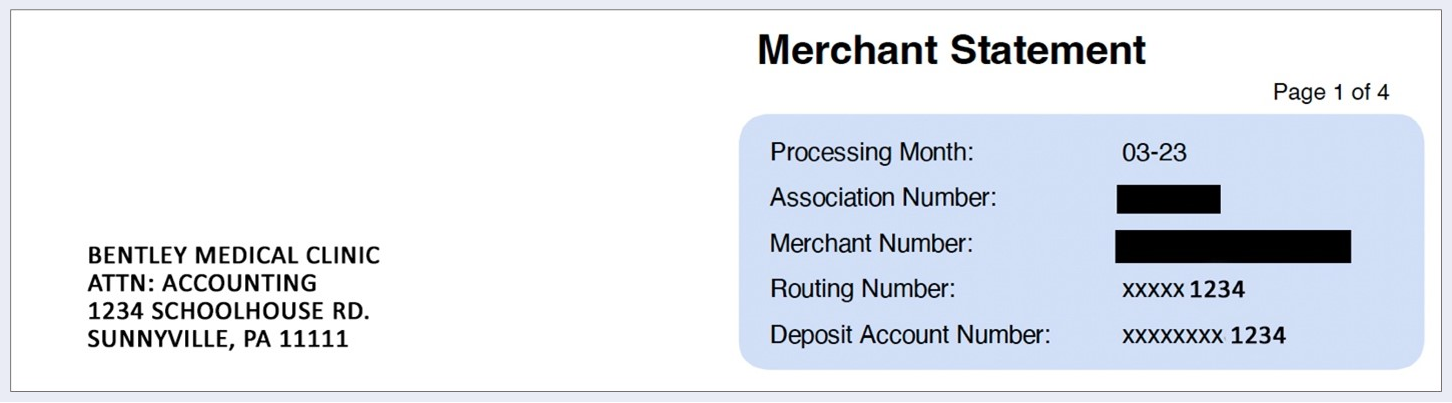
Also front and center is the summary, which provides a quick overview of the past 30 days’ activity and can include chargebacks (when a customer requests a refund directly from the credit card company) and reversals (the amount that was initially resolved against the merchant but was ultimately found in favor); adjustments; and fees charged.
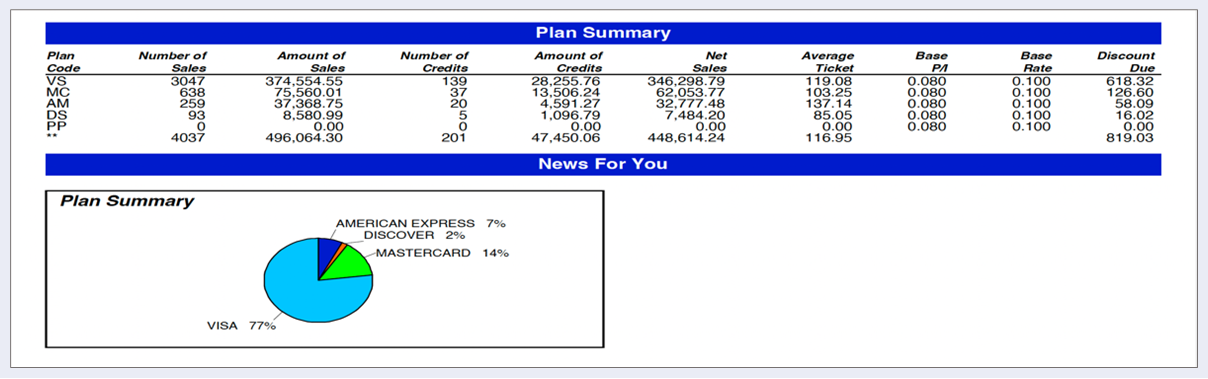
The next section you’ll likely encounter is the pages-long “Deposit Details,” which breaks down each batch transaction, line-by-line for the previous 30 days. But as seen in this example, multiple batches were created each day, which as noted here, can number in the hundreds, and can take up huge swaths of paper.
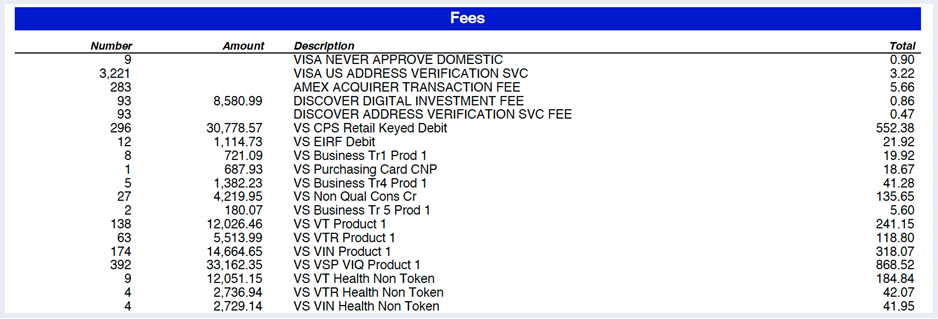
After that, we come to the “Processing Detail Qualified” section, sometimes referred to as “Fees.” This section contains the most confusing jargon as it unfurls, denoting interchange fees (these go to card-issuing banks), assessments, the merchant’s pricing model, and all other various fees, each broken down by card type, ending with the fees’ grand total. Below is an example of what this looks like—this section takes up almost four pages alone on this resort’s statement and contains multitudes of confusing codes.
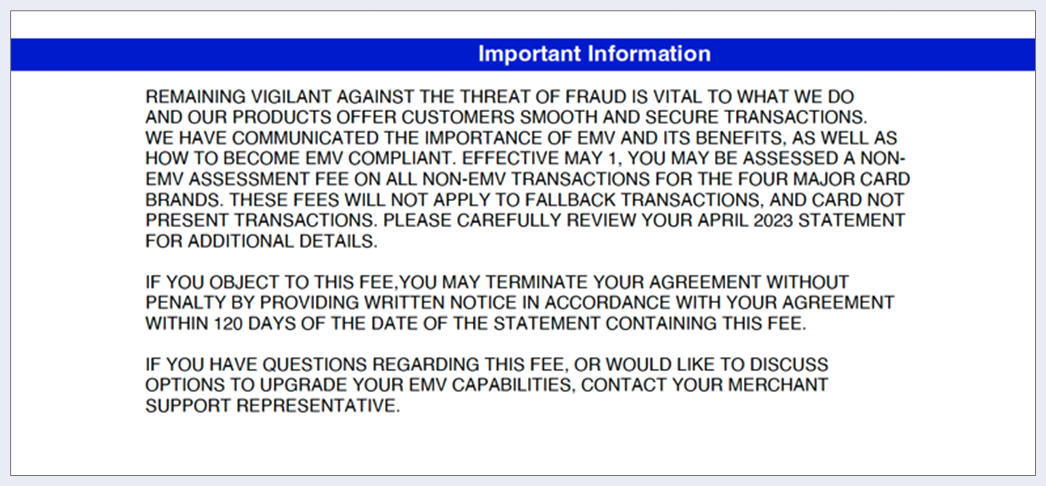
Finally, there is typically a section called something like “Important Information About Your Account.” As implied, this section is essential, and should not be overlooked since it contains news regarding rate fluctuations and new policies that your processing company may be implementing—aka new ways to charge you more money. Appallingly, your original processing agreement included language allowing processors to raise rates and add new fees for any reason, at any time. The only way to combat these increased costs is to go head-to-head with your processor, which can take significant time, resources, and an understanding of merchant statements that most businesses do not possess.

What Happens Next?

But what do you do if you see an increase? Or if you, understandably, don’t have the time to pour over pages of statements monthly, let alone keep up with the multitude of changes and new fees assessed by processors looking to drive up their profits?

That’s where the auditing experts at Merchant Advocate come in: not only do our trained analysts make an initial meticulous review of your statements to identify overcharges, inflated rates, and hidden fees—they keep checking your statements month after month to ensure there are no surprises.

Merchant Advocate has saved clients more than $300 million in excess fees, without switching processors. Contact us to receive a free analysis of your merchant account with just one, no-commitment phone call.

[Updated 2024] Magnetic Stripes to EMV Cards: The Business Impact

A New Era of Credit Card Acceptance is Here: Stop Accepting Magnetic Stripes in 2024

By Merchant Advocate

Nowadays, it’s all about that chip, commonly known as the EMV, for Mastercard, Visa and Europay—the companies that rolled out the technology stateside in 2015. It generates time-sensitive authentication codes for every transaction, adding a layer of encrypted security that helped bring down in-person counterfeiting by more than 76%.

In 2021, Mastercard officially announced a phase out of the magnetic stripe format over the next decade to provide better security and fraud prevention. The other credit card brands followed suit shortly thereafter. Tapping cards and using chip readers are now the most prevalent methods for paying with plastic.

What Does this Mean for My Business?

Processing Fees

What does this change mean for businesses accepting credit cards? For one thing, it means every swipe now comes with an avoidable fee. In their quest to phase out the magnetic stripes, processors are now assessing an EMV non-acceptance fee for those who do not accept chip cards. Merchants must upgrade their terminals to accept EMV chip card transactions.

Transaction Security

Stripes contain a myriad of sensitive information including the cardholder’s name, card number, and verification numbers, with no encryption. Over the years, this vulnerability has resulted in billions of dollars’ worth of chargebacks and fraud, including the large-scale spread of “skimming” card scams. Meanwhile, sophisticated hackers have found endless ways to exploit outdated magstripe cards, even infecting corporations’ credit card terminals with viruses to gain access to customer data.

What is a Magnetic Stripe Card?

The ubiquitous “magstripe” credit card from brands like Visa, American Express, Mastercard and Discover has a silver or black magnetic stripe on the back of it. An advent largely credited to IBM, the magnetic stripe has been a fixture of credit card transactions as far back as the 1960s. This stripe contains essential account information like the card number, expiration date and other issuing bank data.

When a customer swipes the card through a card reader, the information is read magnetically, allowing transactions to be processed. This single advancement catapulted the use of credit cards as everyday tender for all types of monetary transactions and changed our relationship with spending forever.

Do EMV Cards Have a Magnetic Stripe?

Despite the timed phase-out, many EMV credit cards still contain a magnetic stripe. Because not all card readers support EMV chip technology, this is still necessary as the transition to chip technology is still ongoing. The magnetic stripe serves as a secondary backup for processing transactions when chip readers are not available, often in the form of MSD (Magnetic Stripe Data) contactless payments.

When Will the Magstripe Go Away for Good?

By 2033, the antiquated magnetic stripe will have seen its last sunset with the United States expected to go completely magstripe-free by 2027. And while other security measures such as biometric markers including fingerprints and face recognition have been tested across the world, replacing hundreds of thousands of POS machines in the United States will be slow going.

Is Your Business Being Charged for Magnetic Swipes?

If you’re not sure how to check if your machines are updated to satisfy new EMV requirements, you’re not alone. Credit card processing statements are coded in ways that can mystify even the best accountants making it difficult to ascertain if you are complying. That’s why it helps to have an advisor like Merchant Advocate, who can help decipher your statements and advise you on any point of sale or other changes needed for compliance, as well as negotiate your rates and monitor merchant service accounts monthly. They work in real time to find overcharges and other errors, helping you to keep your profits.